
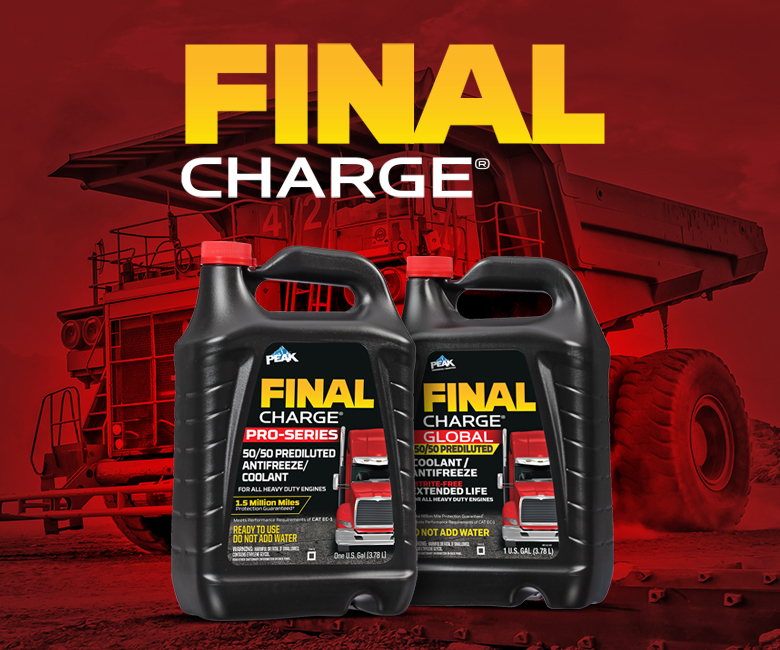
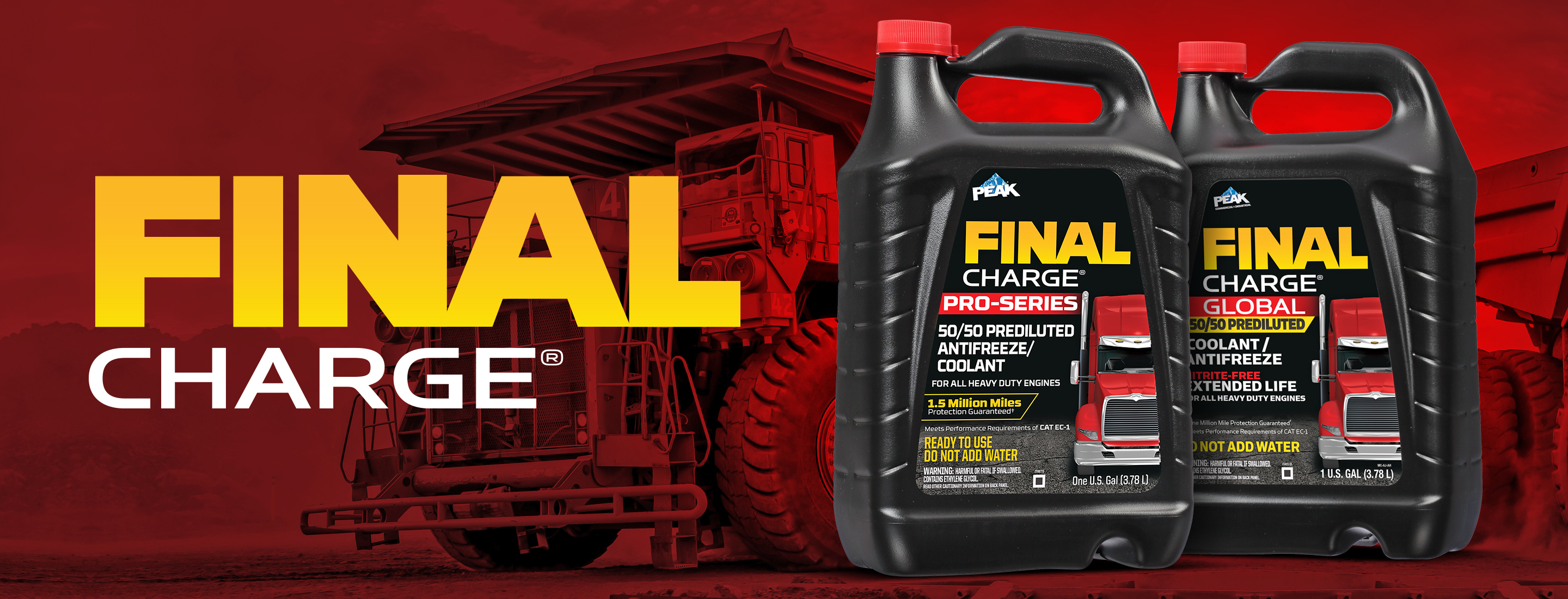
1.5 MILLION MILES - BEST IN INDUSTRY SERVICE LIFE
New Final Charge® PRO-SERIES advanced heavy duty antifreeze/coolant technology delivers highest service-life in the industry. Guaranteed. Available in full strength and 50/50 prediluted drums, totes, bulk, & gallons.
Learn More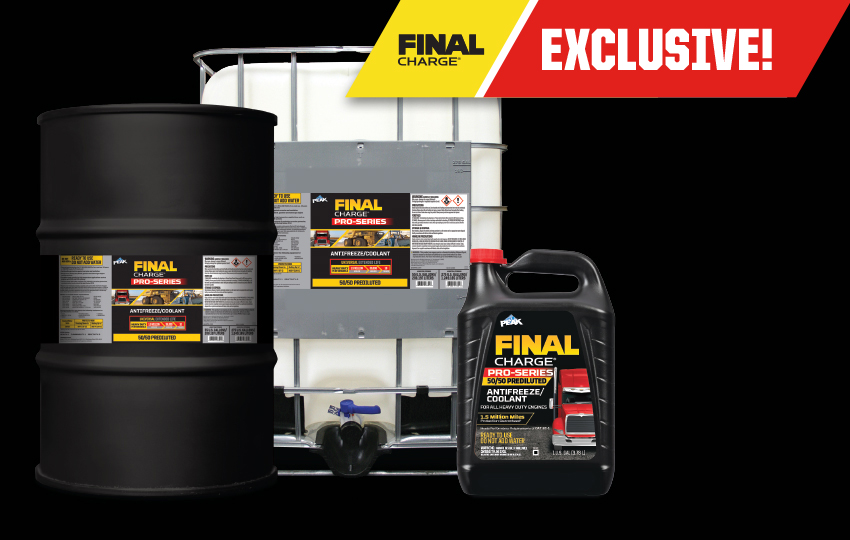
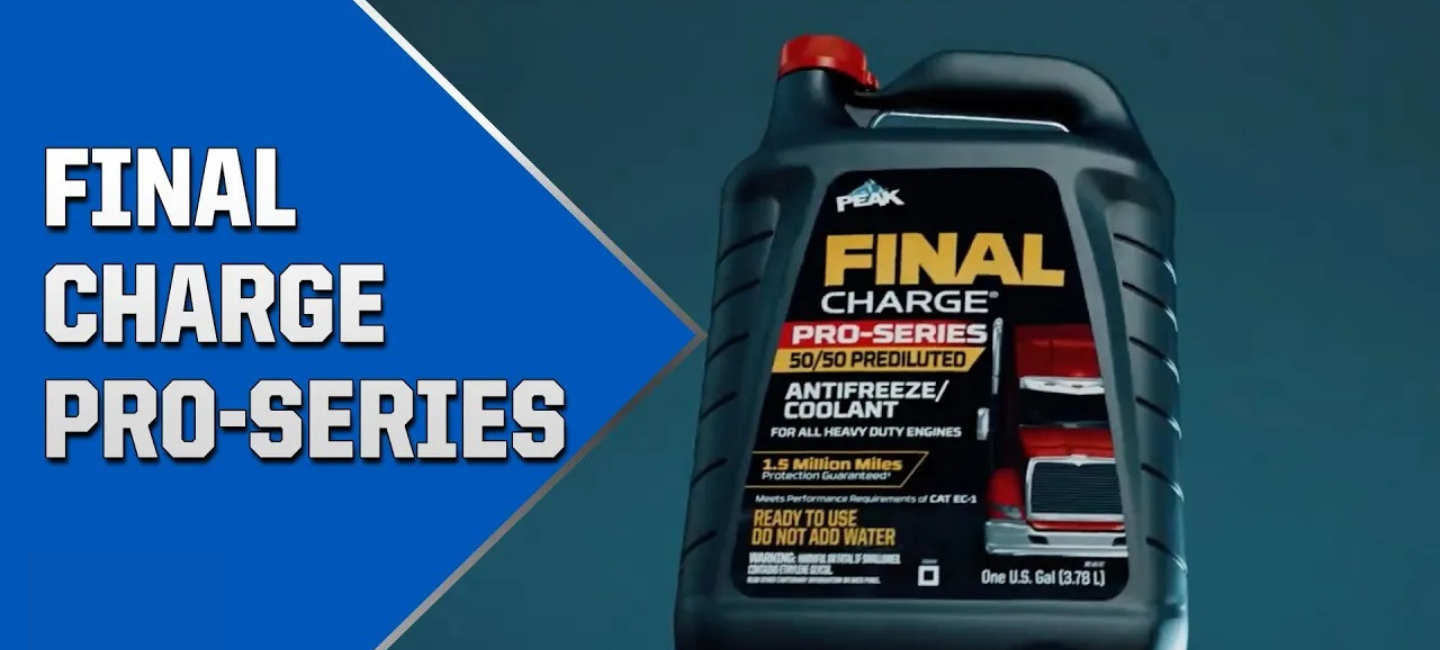
FINAL CHARGE® Global
Formulated for ALL heavy duty diesel, gasoline and natural gas engine cooling systems. With Organic Acid Technology (OAT), FINAL CHARGE® Global guarantees protection for all cooling system metals.
Learn More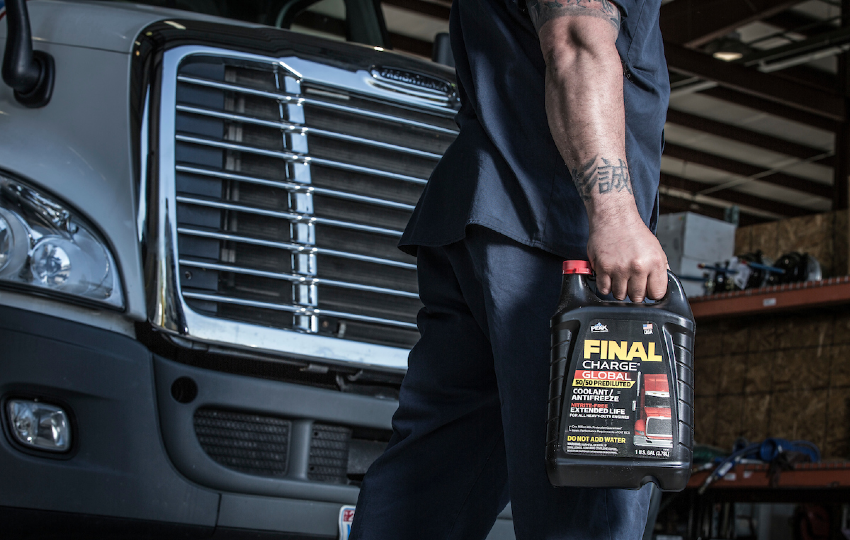
Latest news & Insights
The latest news and articles from FINAL CHARGE®
-
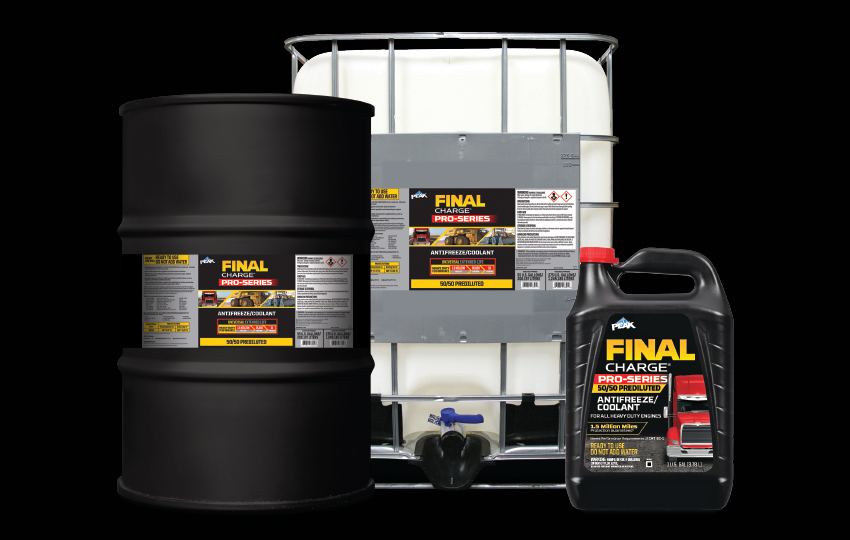
OLD WORLD INDUSTRIES FINAL CHARGE® PRO-SERIES RECEIVES OEM APPROVALS
Advanced technology delivers industry leading cooling system protection for 1.5 million miles
Learn More
-
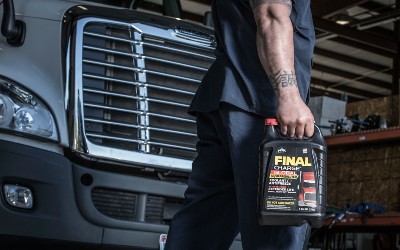
Key Products to Boost Fleet Productivity: Extended Life Antifreeze/Coolants
The connection between your fleet’s engine performance and the larger fleet system’s success is undeniable; fleet professionals should take advantage of every available opportunity to support an engine with quality products to keep their engine and their operation running smooth.
Learn More
-
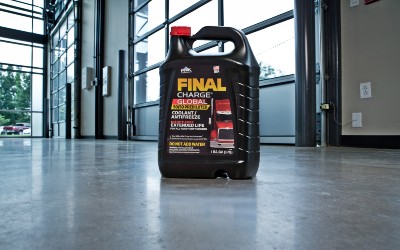
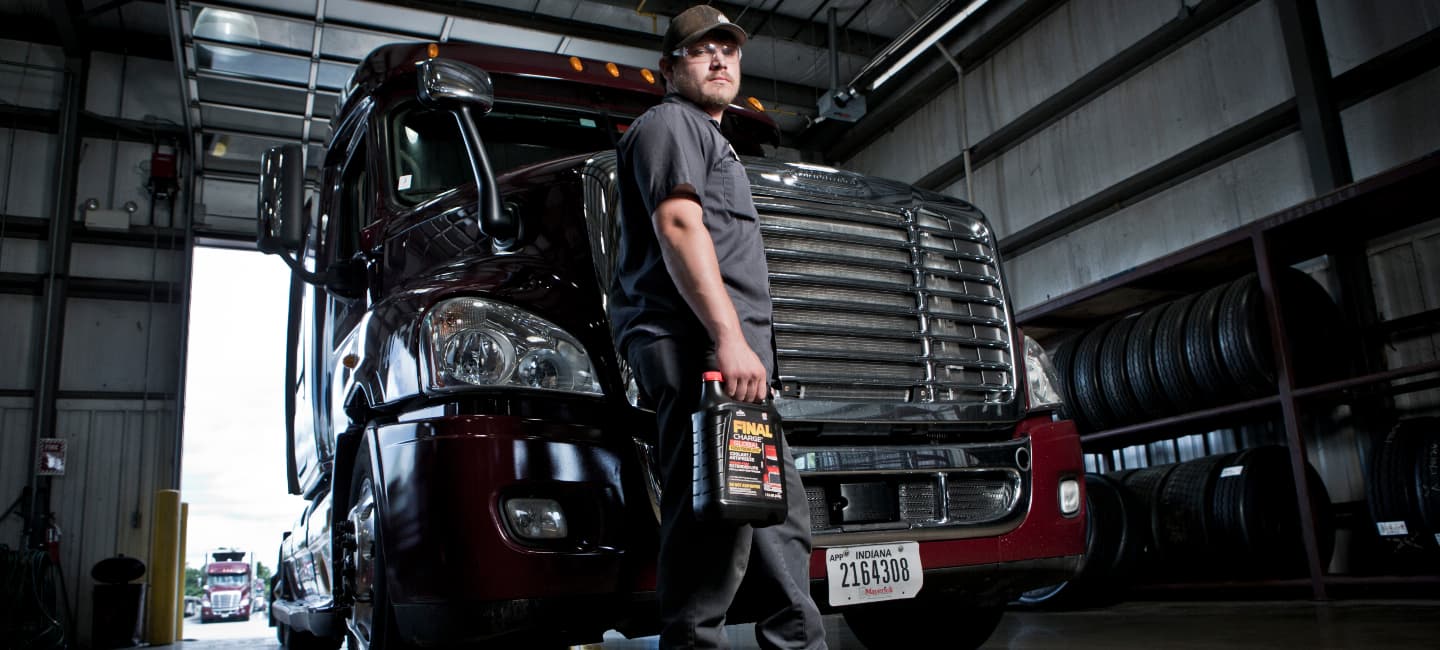
Million Mile Mavericks
Learn how Maverick Transportation leverages FINAL CHARGE® Global Extended Life Antifreeze + Coolant to extend service intervals and reduce service and maintenance costs.
Learn More